
April / May Reading Diary
By Kim Moore

April and May is marking season in university, and marking always swallows me whole. As a task, it’s not one my ADHD brain copes with very well. I can’t finish it in one dopamine fuelled rush. It stretches over weeks, and always fills up every corner of the deadline before marks are released. And nobody notices you doing it - only if you’re not doing it!
Marking is over now though, and I’m emerging from the slog of it and looking around and realising that the sky still exists, that clouds still gather above the moor, that the pond is still and quiet in the garden, unconcerned by things like marking. Last night I went on a run along the edge of the moor and saw a young hare bounding through the field and I felt a surge of gladness rush through me to be out in the good air.
Here is some of my reading over the past few months - always not as much as I’d like, but all read in between marking, external examining, book launches and mothering -
Goyle, Chert, Mire (Cape, 2026)
Jean Sprackland
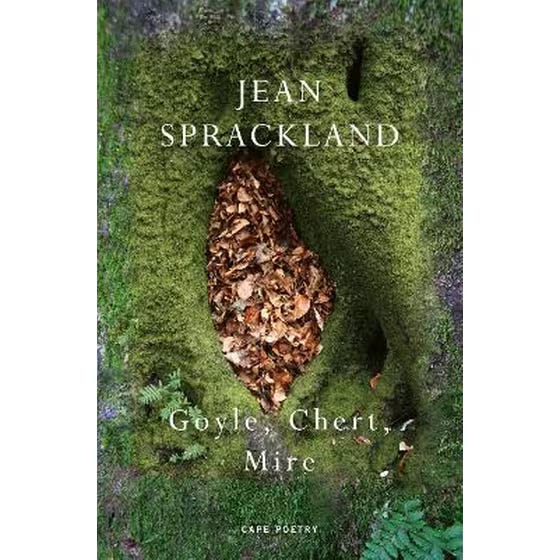
Jean Sprackland’s sixth poetry collection does not disappoint - the book is in three sections. The first is ‘Goyle’ - and in the first poem in the book, we start in the goyle, immersed in the landscape quite literally, and also amongst the detritus of human habitation: ‘Barbed wire, feed sack, rusty carburettor, / matted corpse, too big for crow.’ The last line of this first poem is ‘Turn your back on the light and crawl in’ – and so we enter the book, on our hands and knees, up close with the land and also the body as it moves through landscape and becomes tangled in it.
So what is a goyle? I thought originally it was a ditch, but following a little gentle research, I discovered a ditch is man-made, whereas a goyle is a natural gully or ravine formed by water. So I’ve probably been calling a goyle a ditch all my life. Sigh. In the collection, the goyle is a boundary, but also the ‘deep groove you think along’. The goyle seems to be the place where time collapses - arrowheads next to barbed wire, the last wolf birthing a litter - as Jean writes in another poem ‘the past is so present / your own life so compressed, / you barely exist here…’
One of the things I really love about Jean’s writing is the way she compares the most unlikely things to make us pay attention. In poem 'the sound of ice melting ‘sounds like an unfolding, / like cellophane clenched into a ball / and dropped in a wastepaper basket, / where it slowly relaxes, / beginning, in that hopeless place, / to recover its true shape / and to speak of reprieve.’ By this point I forget that it’s not the cellophane that is recovering its true shape, or it is, but it is also the ice, ‘recovering’ itself into water, its ‘true shape’.
Who would think to compare ice to cellophane, or to describe a river as shuffling ‘its deck of stones’ or the rushes raising ‘their tattered flags’. This pushing together the detritus of human living with the natural world is symbolic of the whole collection, which amongst other things is a meditation on boundaries and permeability and the way we are all connected to each other.
I’m really excited about hosting Jean tonight for the Wordsworth Grasmere ‘Go to the Poets’ reading series - tickets available here, although the open mic is now full sadly!
You can buy Jean’s book from all good bookshops or online from my Bookshop.org account here
Fallen (The Gallery Press, 2025)
Audrey Molloy
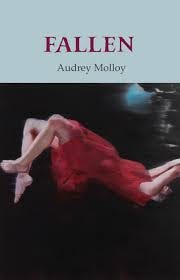
I was lucky enough to work with Audrey a few years ago on the online MA at Manchester Metropolitan University - although she was already brilliant before she started on the course, so I can’t take any credit for her! Audrey is from Ireland but is now based in Australia. I saw her read from Fallen, her third poetry collection at Cork International Poetry Festival recently and she was fantastic.
Imagine being in a theatre after a full day of readings, rich poetic readings, but perhaps your poetry brain might be getting a little bit tired by 10pm, and then a poet stands up and says:
Fallen

Wives are afraid of me now.
They smile at me the way people smile

at leopards through glass, or across a moat:
how safe we are, over here, in our marriages.
Well, I was sitting with the poet Patricia Smith at the time, and it’s safe to say we stopped each other from falling off our chairs. The book tells the story of a ‘fallen’ woman, or asks what it means to be fallen, what it means to be a woman coming undone from the expectations of society and marriage.
This exploration of the fallen woman expands. The poem “The Woman Who Went Down the Plughole” finishes ‘Off she went, / tiny and pale as Fay Wray, arm raised, / not a thing she could do to save herself’. In ‘Afterwards’ we read ‘You are one side of an abyss. / Everything decent, the other.”
The last poem in the collection is another masterpiece, a perfect balanced weight to the first poem. It's called “Contagion” and begins:
Husbands, too, are scared of me now.
They look at me the way people look

at bloodspots on a handkerchief:
This plague could be the death of us.
Later, the poem points out that there is no male equivalent for the word ‘mistress’. It then continues, deliciously:
Tell me, Woman, what would you call yours?
Master? (Surely not - too tricky to distinguish

from your husband!) And playboy grants him
far more agency than he deserves.

Oh, I would call mine drone, and be his queen,
and buy him rings, and make love all night long

in cheap hotels, and I might have me more than one,
and tell them lies, or tell each one I love him.
I hope this book makes it onto some prize lists, so more people read these brilliant, funny, dark, shocking, radical poems that open up the unspoken heart of female desire.
Probably the best place to get this book is online or direct from the publisher here. Gallery Press are a brilliant Irish press, but they don’t appear to be on Bookshop.org
BLOOD HARMONY
BRUCE SNIDER
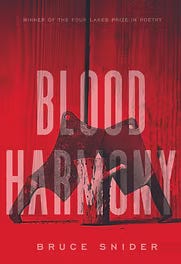
I met Bruce at Cork International Poetry Festival - one of the reasons I love the festival is because Patrick Cotter, the director, has excellent taste and flies in some amazing poets from America which I wouldn’t otherwise be able to hear read. To my shame, I’d never heard of Bruce before but his reading absolutely blew me away. Sadly the rest of the audience thought so too, and all the copies of his latest collection Blood Work were gone by the time I wrestled my way to the book stall. I went over to bemoan this fact to Bruce and he very kindly gave me his reading copy, so all was well.
I am so glad he did - I read the collection cover to cover on the flight back from Cork to Manchester. Blood Work is his fourth collection, published by University of Wisconsin Press. It is a story of opoid addiction, and an exploration of the ways addiction tears apart families and society - but it’s also a story of two brothers, a love story really.
One of my favourite poems begins:
Brother of the free-throw shot.
Brother of the peanut butter sandwich,
of dirty socks and chewing tobacco,
of iron forged in the heart of an ancient star.
It’s a bit of a travesty to quote part of this poem, because its beauty and strength lies in the way it moves, how he moves from the anaphora of ‘Brother of’ to ‘Once he’ to ‘My brother’ and then to ‘Once, when’. The brother in this poem is both untouchable, or unholdable (‘My brother of mist rising over the backwoods’ and trapped ‘My brother of the prison cell’.
I also love the way the book explores and expands masculinity - in ‘At the Rainbow Cattle Company’, a series of three sonnets set in a country music gay bar, the first sonnet finishes ‘….What I give / is what he takes - / I move us hard until the music breaks.’ Two poems later we read ‘Because my brother was a man among men / his body meant standing on the factory floor, / a welding torch in his hands.’ This poem I found incredibly moving in the way it explores working-class straight masculinity with such tenderness, without glamorization or shying away from the privilege and pain of heterosexual masculinity. Later in the same poem:
                                                He moved the way water moves -
                                            oblivious to everything around him.

  Doors opened, doors closed, his body passing through them.
                          He was a shiny wheelbarrow left in the garden.
                                               He was a theory of a theory of pain.
It is a fantastic book - and as it’s an American publisher, probably best place to get hold of it is online - or you can order it from my Bookshop.org shelf here
MOTHERHOOD
SHEILA HETTI
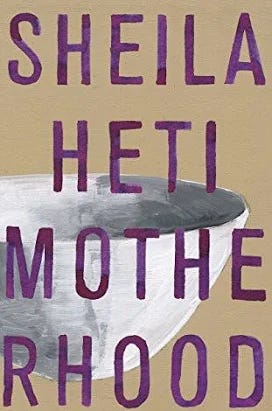
My wonderful friend Amanda Dalton lent me this book and I read it cover to cover whilst on a recent camping holiday. On the back cover, the great Rachel Cusk says it’s an ‘inquiry into the modern woman’s moral, social and psychological relationship to procreation’ - and it really is an inquiry. It’s an inquiry into the ways women are pushed, co-erced or encouraged towards motherhood by family, friends, society, the self.
I found myself wanting her to become a mother whilst reading! It was like it was engrained in me - that desire for a ‘safe’ ending, a familiar ending. Out of all the books I read this month, it’s probably the one that made me stop and think the most, the one that asked me to question so many things I hadn’t stopped to think about, or so many things I’d taken for granted.
It’s also a book about being a woman and being an artist. It carves out a space for thinking about the decision of having a child or not having a child. I was uninterested in having a child my whole life, and then suddenly at the age of (I think) around thirty-six, it was like a light switching on in my body and I couldn’t think about anything else.
Sheila Hetti writes so beautifully about that feeling, that desire, tracing the roots of it down and around and through. There are no easy answers in this book, but lots of questioning. I wish I’d read it before becoming a mother. I would still have made the same decision, but I think I would have done so more consciously, more alive to all the possibilities.
If you’d like to buy Sheila Hetti’s book, you can buy it from all good bookstores, or from my bookshelf at Bookshop.org here
Hi Kim,
I humbly submit my little "poem" written one day when fvaced with a pile of essays to correct. Everything is true. Bon courage !
Marking Time
Place briefcase next to table.
Open briefcase.
Take out essays.
Play scale of E flat, then C minor (harmonic and melodic) on nearby piano, handily open.
Lapse into C major.
Attack Mozart.
Open file with essays inside.
Clean glasses with piece of kitchen roll from pocket.
Hold glasses up to light.
Frown.
Go to kitchen, wash glasses in hot soapy water.
Rinse.
Dry.
Put kettle on.
Come back to table.
Play a quick diminished seventh chord, fortissimo, in passing––
Beethoven. Triumph in adversity.
Kettle boils.
Make tea.
Put tea cosy on teapot.
Remove warm cosy from teapot,
Place on head, look in kitchen mirror.
Grimace.
Glance at kitchen clock.
Pour milk.
Stir tea.
Pour tea.
Bring tea to table.
Take out first essay.
Play several arpeggios in A.
Modulate to E (via B flat).
Swallow tea.
Check ink in red pen.
Sit down.
Stand up.
Go to toilet upstairs.
Come down.
Sit down.
Write poem.
Motherhood is so good!