
Broken Things.
Stories, living with CPTSD, and what I found in the woods.

By Clare.
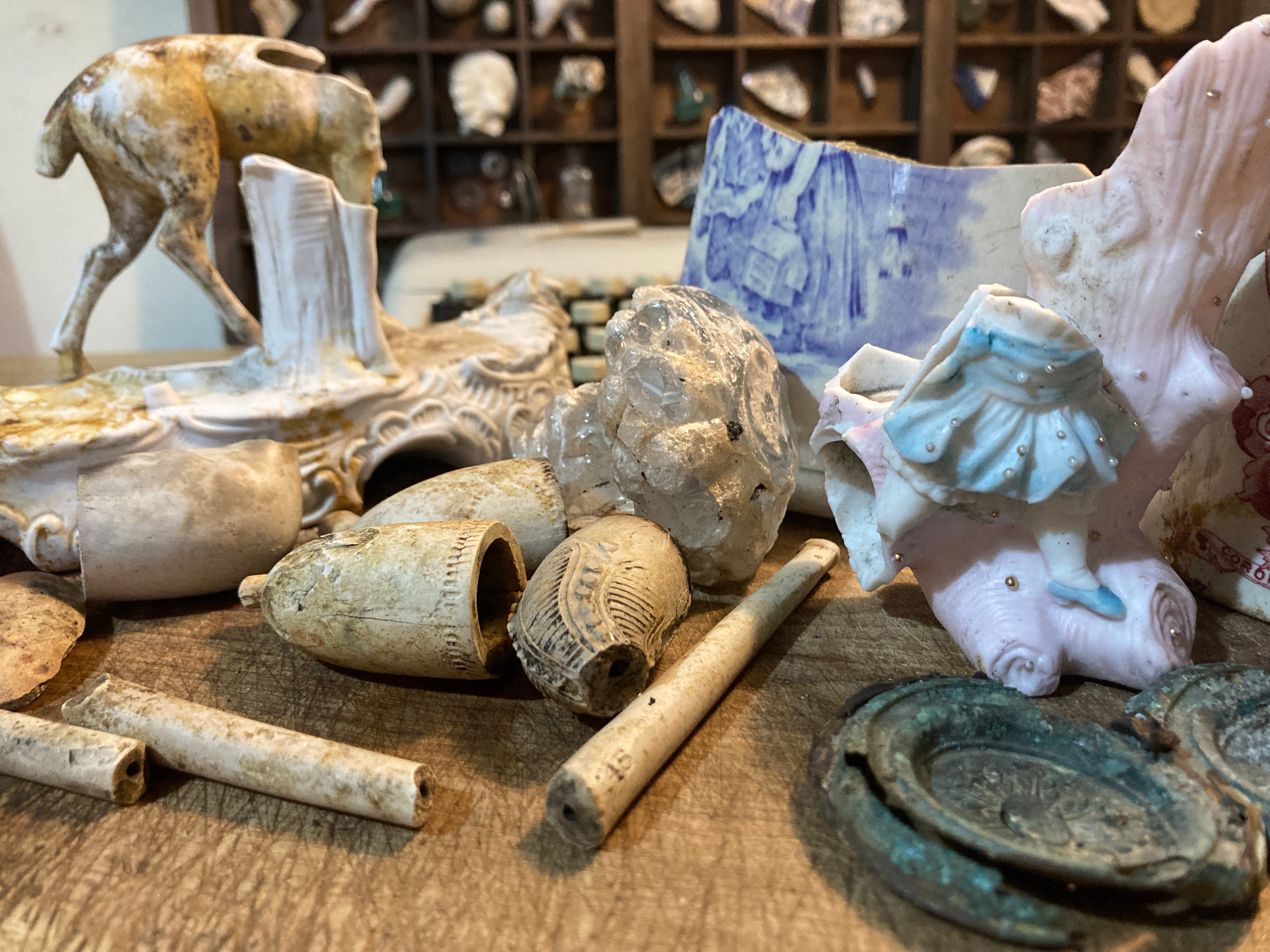
One of the most challenging aspects of living with mental health problems are the stories we tell ourselves. When I feel the weight of depression settle on me and within me, when anxiety and grief are sharp and hot in my chest, it’s easy to fly into panic. I will not get through this. I will always feel like this and it will never leave me, I cannot be a parent/ partner/ friend/ poet/ teacher when I feel like this. I am broken and wrong and cannot be fixed.
In February, Kim and I will be taking part in a discussion of Sylvia Plath. Her life exemplifies the two poles of an old argument – is creativity linked with mental illness and disorder? On the one hand you might argue that her relentless drive to push language to - and beyond - its limits was driven by her to need to express the intensity of her internal world, her psychological sensitivity and self-analysis, her sensitivity to external experiences and her creative, synaesthetic perceptions. Her madness fed her creativity. On the other hand, she was extraordinarily talented and hard-working, and she died at thirty. Madness silenced Sylvia Plath.
Again and again, the truth of Muriel Rukeyser’s proclamation - “The universe is made of stories, not of atoms”. Stories are not just what bind us together, within and beyond our societies and cultures. Stories also define the sense we make of ourselves, how we feel about ourselves. In previous substacks I’ve talked about how exerting conscious control over those stories can be a vital part of recovery – and how it can feel when processes such as psychiatric diagnoses take that control from us.
Other stories exist. In some faiths or cultures, for example, experiences which might be framed as “psychosis” would be understood as a as a privileged access to another reality, or to a deeper level of insight or connection. Personally, framing my world experience in shamanistic terms is not for me. I just want to feel that there’s a sense and a purpose in how I feel: that there’s a more comfortable way of moving through the world. Which brings me to broken things.
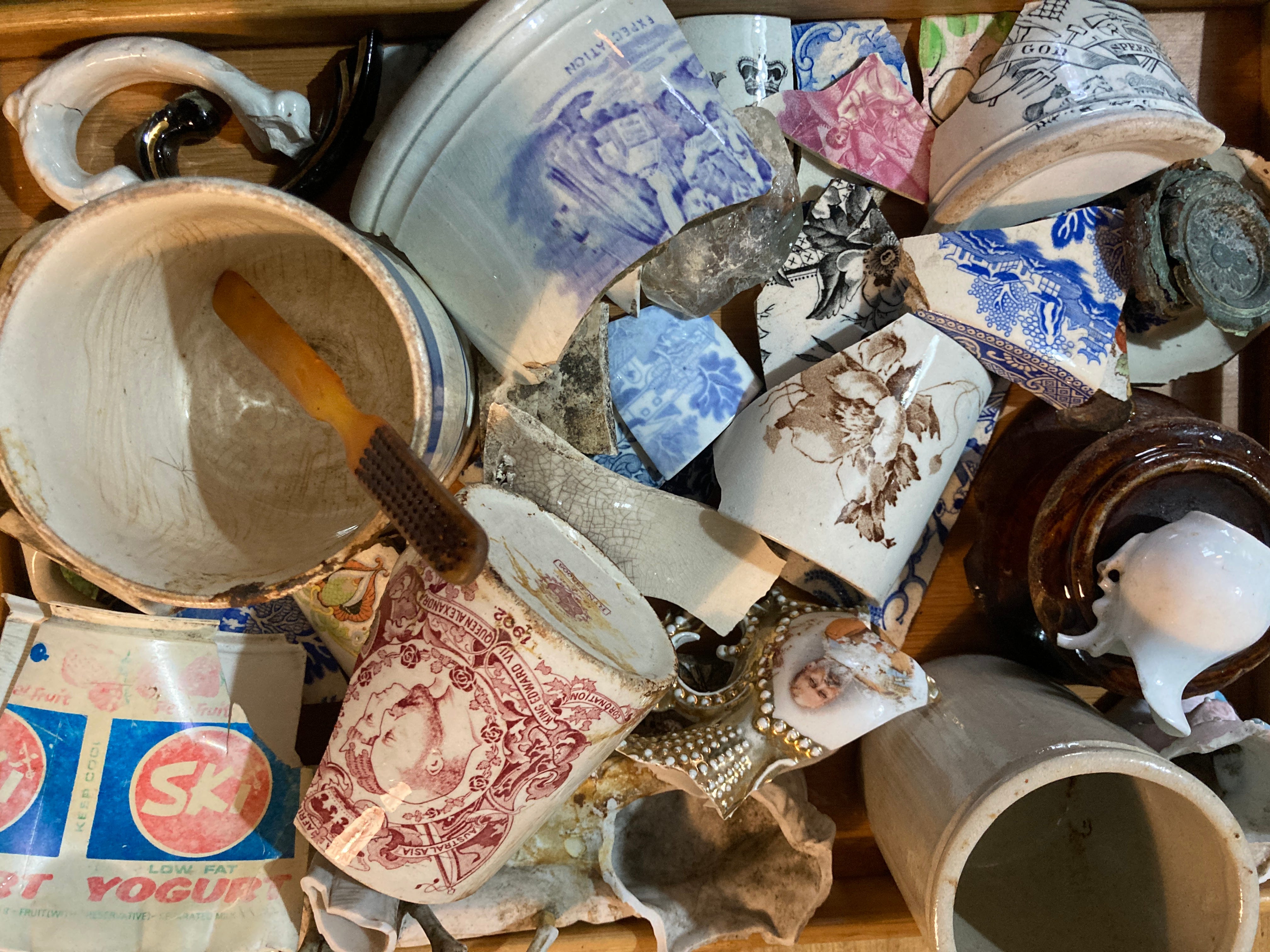
Yesterday I went to the secret woods which Nick owns/ is the custodian of, and which he shares with me and Alice Wolfe and the other people who work to protect and restore this small, injured section of land. A former tip built on ancient woodland, the site is characterised by rubble, glass, and poor, loose soils; scarred by the pits and trenches of illegal bottle diggers who show no respect to the land and have even felled its trees. We’re slowly clearing and healing it, removing rubble and glass, heavy metals and plastic, filling trenches, planting saplings.
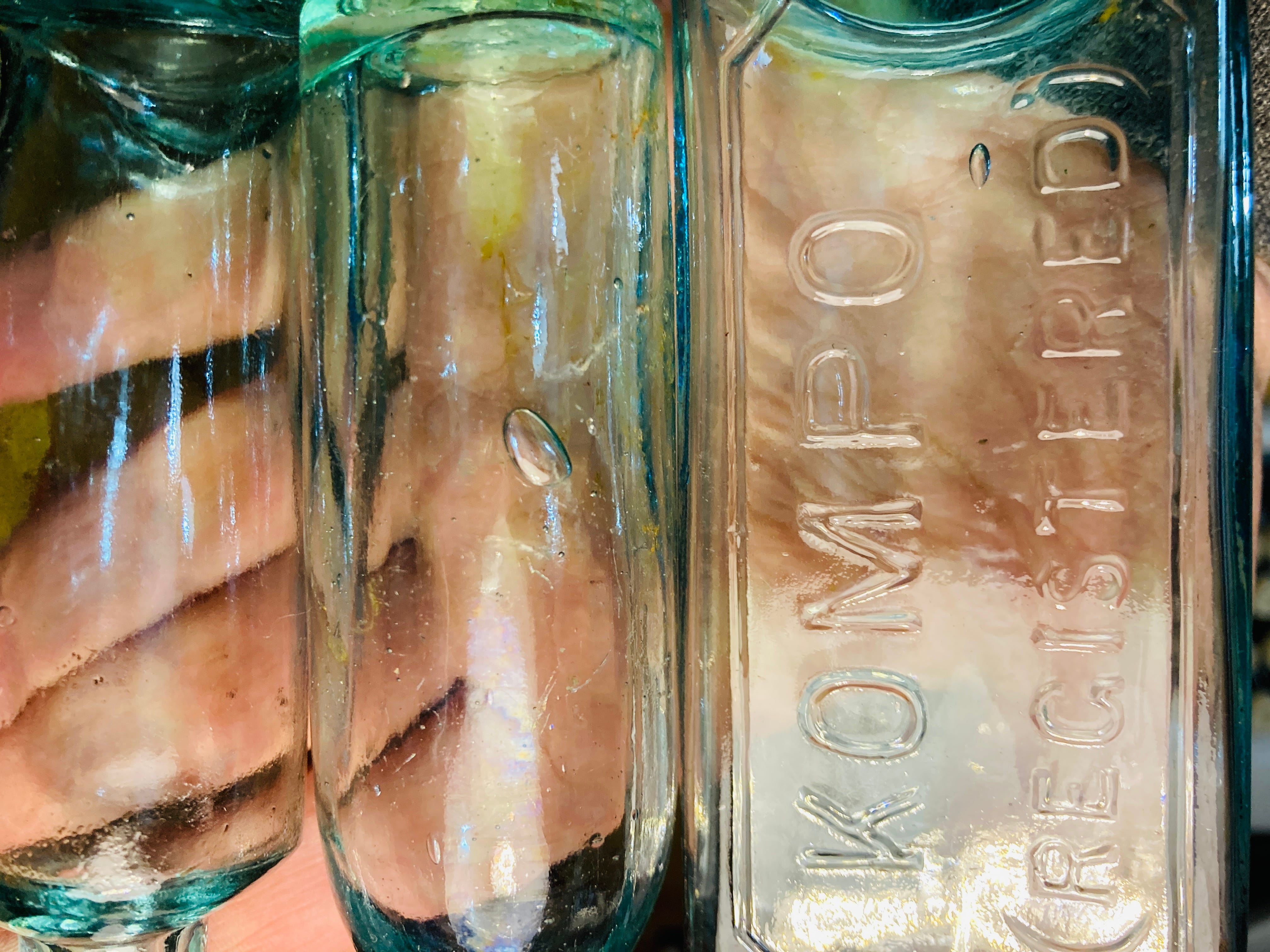
Yesterday I continued the hard labour of filling a huge, deep trench which had felled and destablised trees, sifting the loose soils as I went for old batteries and large bricks, broken glass for recycling, shards of pottery. Along the way, I find unbroken Victorian and early twentieth century bottles – some of them still filled with stinking, decades-old fluids. Few of them would sell, but all of them, to my eye, are beautiful – their warped and imperfect glass, their odd angles, their stories.
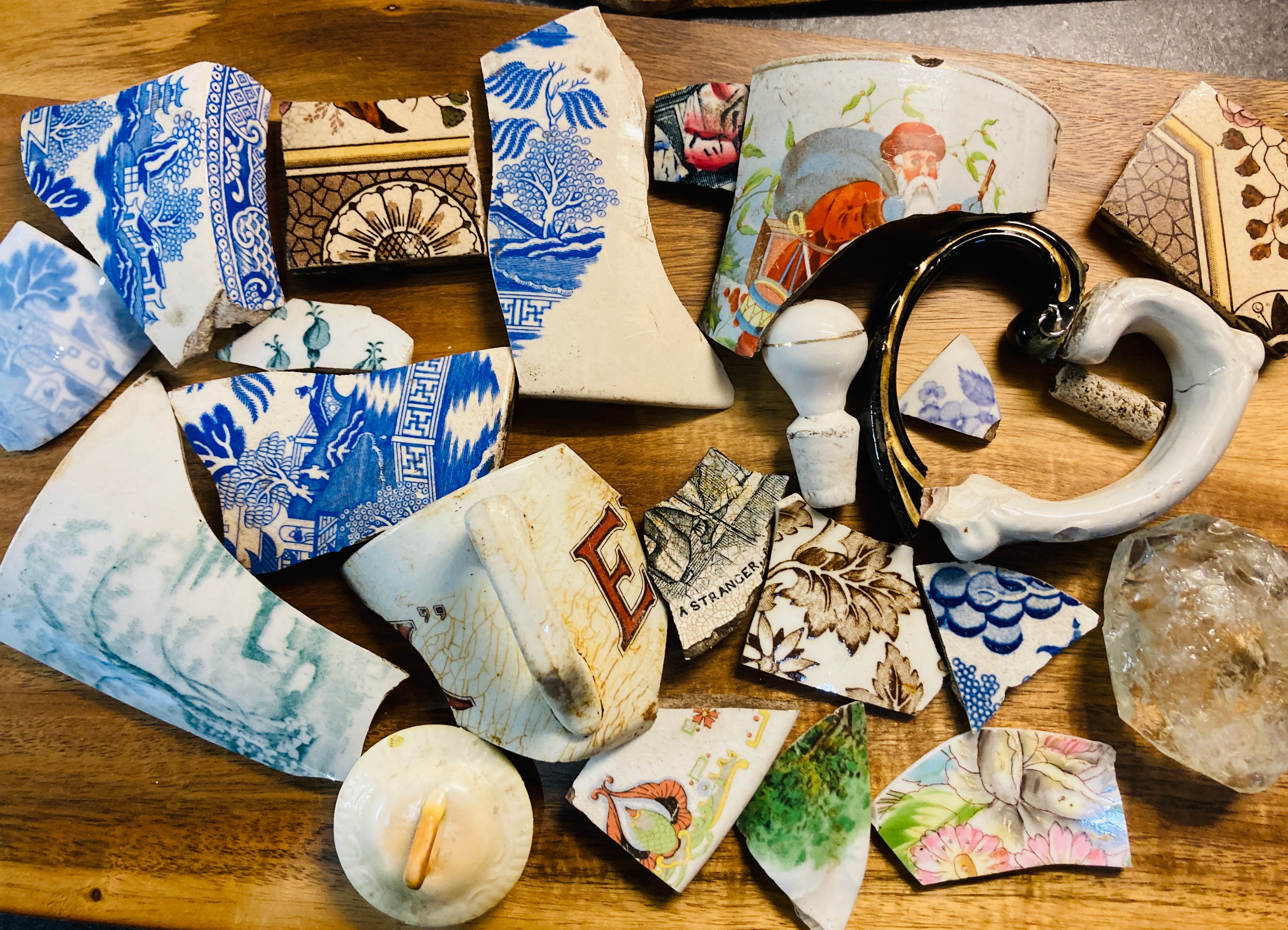
And the shards. Some are so startling, or so meaningful, I bring them home. A picture of Santa! Where the pottery breaks, trees and birds, flowers, faces - even words - are taken from their usual context, liberated, perfectly framed. Most shards I place in a big bag for Alice, who transforms them into exquisite mosaics representing the wildlife who have survived, or who are now returning, to the woods. We sit together on the bench and watch the birdfeeders – crowds of coal tits feeding, a nuthatch, a tiny wren. Alice is especially pleased with the gold shards, the green, the mosaic of cracks on old white pots which she sees as the feathers of a barn owl.
But we both agree that there’s not a single shard we don’t love: how even the ubiquitous, common-as-muck Blue Willow gives itself up in infinite variations when it is broken. A manic gang of long tailed tits pay us a visit, a lone squirrel unhurriedly gathers nuts. Let that be my story for today. I am a broken thing, and I am beautiful. I am a white feather in the night, I am a leaf. I am a broken woman stroking a dog, a girl with no face, an animal, a broken King. I am a tree, a series of flowers, I’m a river.
Mudlarking; finding new ways to tell out stories; and finding beauty in broken things are just three of the topics we’ll be addressing during January Writing Hours: - a daily poetry workshop with me and Kim . Click on this link to buy your month-long or week-long subscription. Bursaries and pay-what-you-can available.
Beautiful post Clare, I'd love to know if there are any details available about yours and Kim's talk on Plath x
Gorgeous. Thank you. Glad to have found your Substack, a treasure in itself. 🩷