
Chronic conditions and altered forms
on climbing, hypermobility, poetry, and nature.

Clare here.
As a child, I didn’t consider myself sporty. According to the PE teacher, sport meant netball and rounders, and I was rubbish at both: uncoordinated, out-of-breath, intimidated by the girls with long clean hair and smart clothes. My mum and my five siblings were athletes and swimmers, marathon runners, players of football and volleyball, hockey and squash. I was different. I liked reading. A lot. I also walked for miles, hung out on the park, climbed trees. I spent my summers barefoot, played tig, built dens, swam in streams and lakes – but to PE teachers, that doesn’t seem to count.
After my seemingly unsporty childhood, I spent my adolescence and my early adulthood trying to shrink, injure or kill my body. Poor body. I was in my mid-twenties - very thin and covered in scars – when a friend passed me a leaflet for a “Beginners Climbing Class”. Then a new chapter began. My body and I finally made friends. A very tentative, conditional friendship admittedly, but for the time I climbed, my body was a different creature to me, and my mind was at peace.
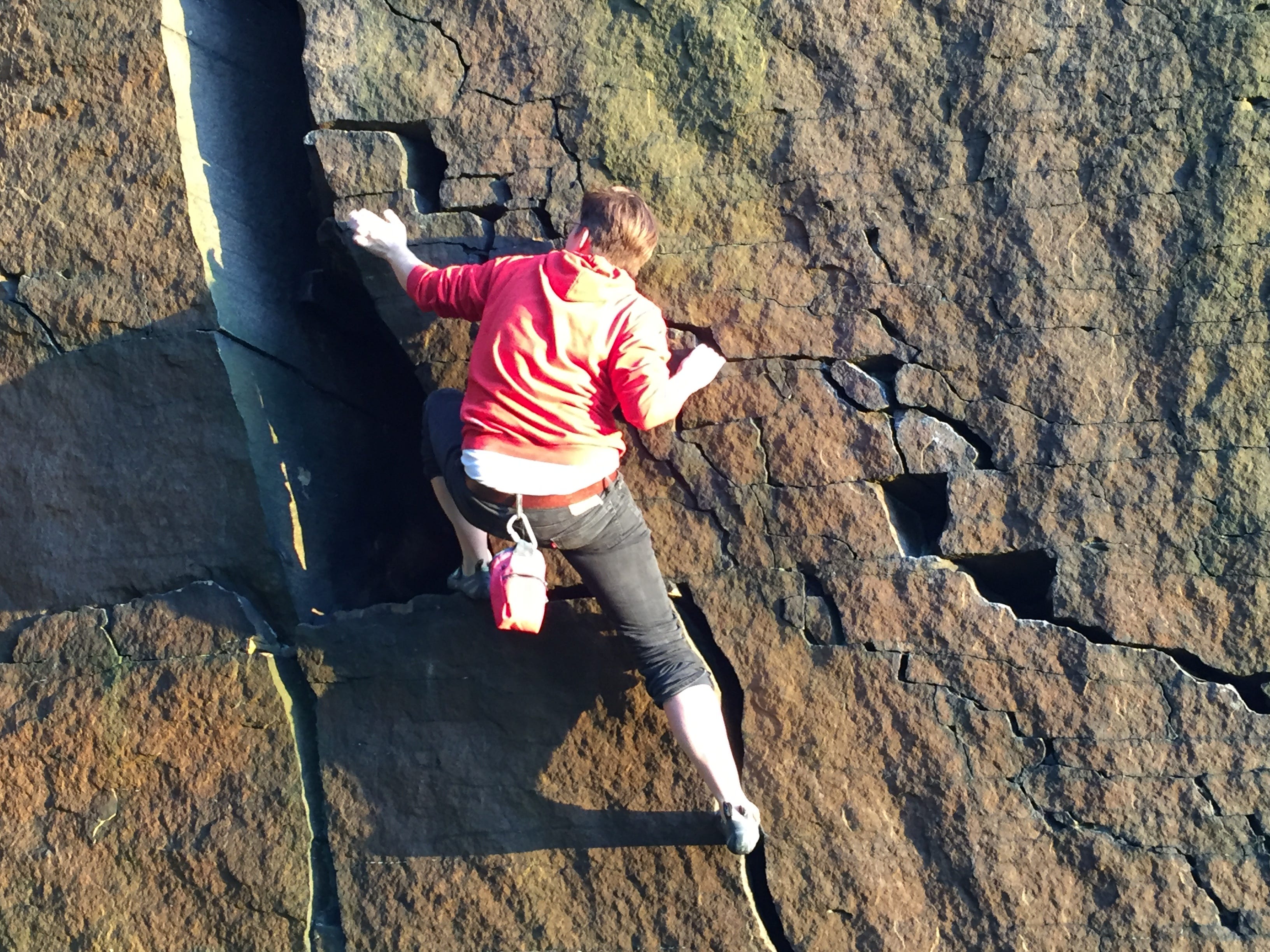
Helen Mort is perhaps the best, and best-known, contemporary poet of climbing. In her writing, climbing is more than sport: it is lifestyle and passion, identity, politics, an expression of gender and liberty, a way through her own complicated relationship with body. Yet even she acknowledges the difficulty of expressing what it feels like to climb: the melding of bodymind in intense focus, which is part-fear and part-engineering, which is also like being a river and flowing, or dancing; which is an umbilical connection to your belayer, whose muscles and sweat you deeply know; it also being very, very alone. You are fish and bird and goat and stone, and human.
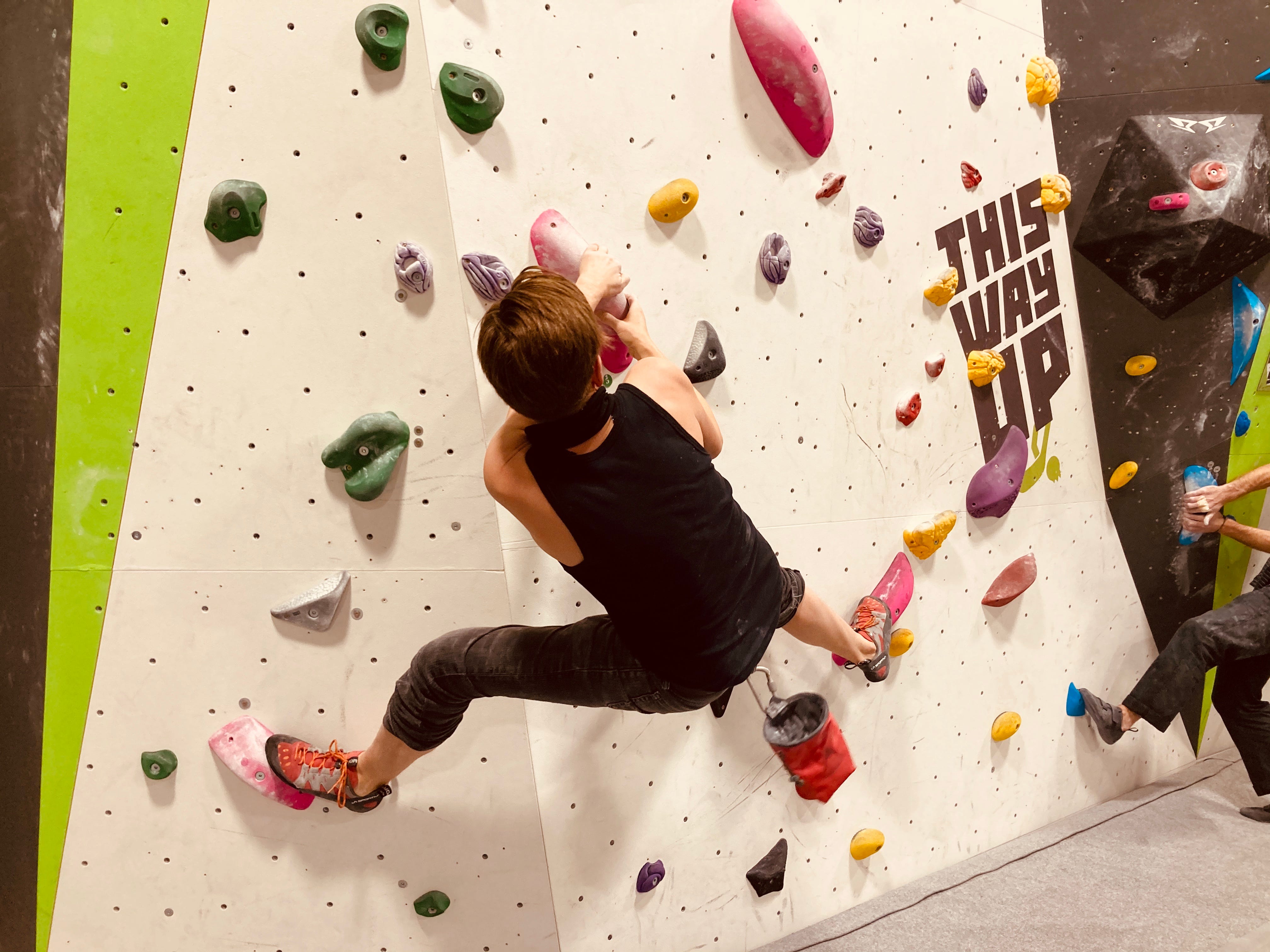
Climbing was all of that and much more, or none of it; yes, it is hard to write. And yes, I write in the past tense, because I don’t climb anymore, because the arthritis which started in my ankles and hands ten years ago got much worse. At first, I blanked it out with painkillers and bloody-mindedness, but after surgeries, after I gave up running, after the pain spready to my knees and my elbows, after I realised that I was risking my ability to walk and write without severe pain, I gave up. It’s been three years since I last climbed.
Osteoarthritis usually develops gradually, the result of damage to cartilage through a natural process of wear and tear. Mine arrived rapidly, loudly, in multiple joints. Yet I didn’t test positive for the rheumatoid factor. Painkillers, surgical debridement and microfracture was the only response; the arthritis in my hands is too advanced now for steroid injections. Surely, I asked the doctor, there’s an underlying cause? Yes, said the doctor - bad luck. The physio didn’t agree. There’s some sort of big picture going on here, Clare, she insisted the last time I saw her. And the following day, that picture started to make sense.
In my family, the history of aneurysm is extremely strong. My dad died of a ruptured abdominal aneurysm; my eldest sister developed a serious cardiac aneurysm requiring open heart surgery. One of my brothers has a mildly dilated cardiac aorta, and so, it turned out when I received the results MRI, so do I.
Bloody hellfire! I have a cardiac aneurysm! Not bad enough though to require urgent surgery - but significant to be closely monitored, and to beg the question why. Several consultants and many tests later, I can tell you - sort of. I have an unspecified hypermobility disorder/ I am pathologically stretchy. This causes joint instability, which leads to continual small injuries, which in turn cause arthritis. The stretchiness of my connective tissue is the likely explanation for my aneurysm, and also my lifelong tendency to black out, my breathlessness and shortsightedness, my stupidly slow digestive system and my peachy smooth skin.
There’s also a striking - though little-understood - correlation with autism, migraine, and liking Nutella. Actually, not the last one. And it’s not the end of the world, though the fact that the arthritis is now in my hips makes me feel ancient. It’s interesting that I feel obliged to count my blessings. True, it could be worse, but it’s also true that it hurts and it limits what I can do. It changed the shape and texture of my everyday world and it took away two things I really loved.
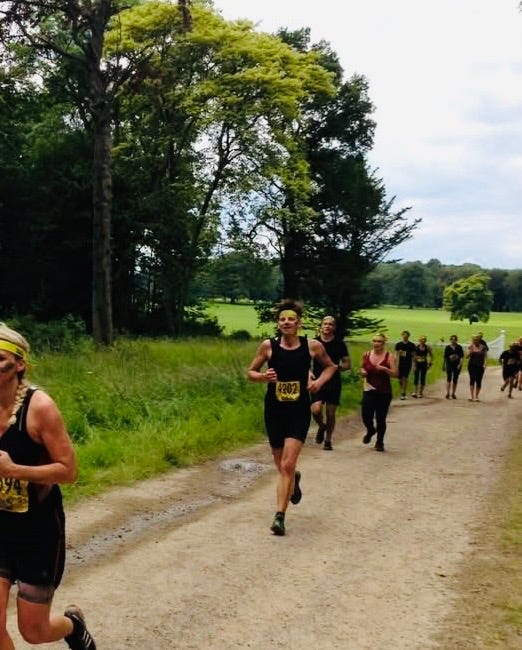
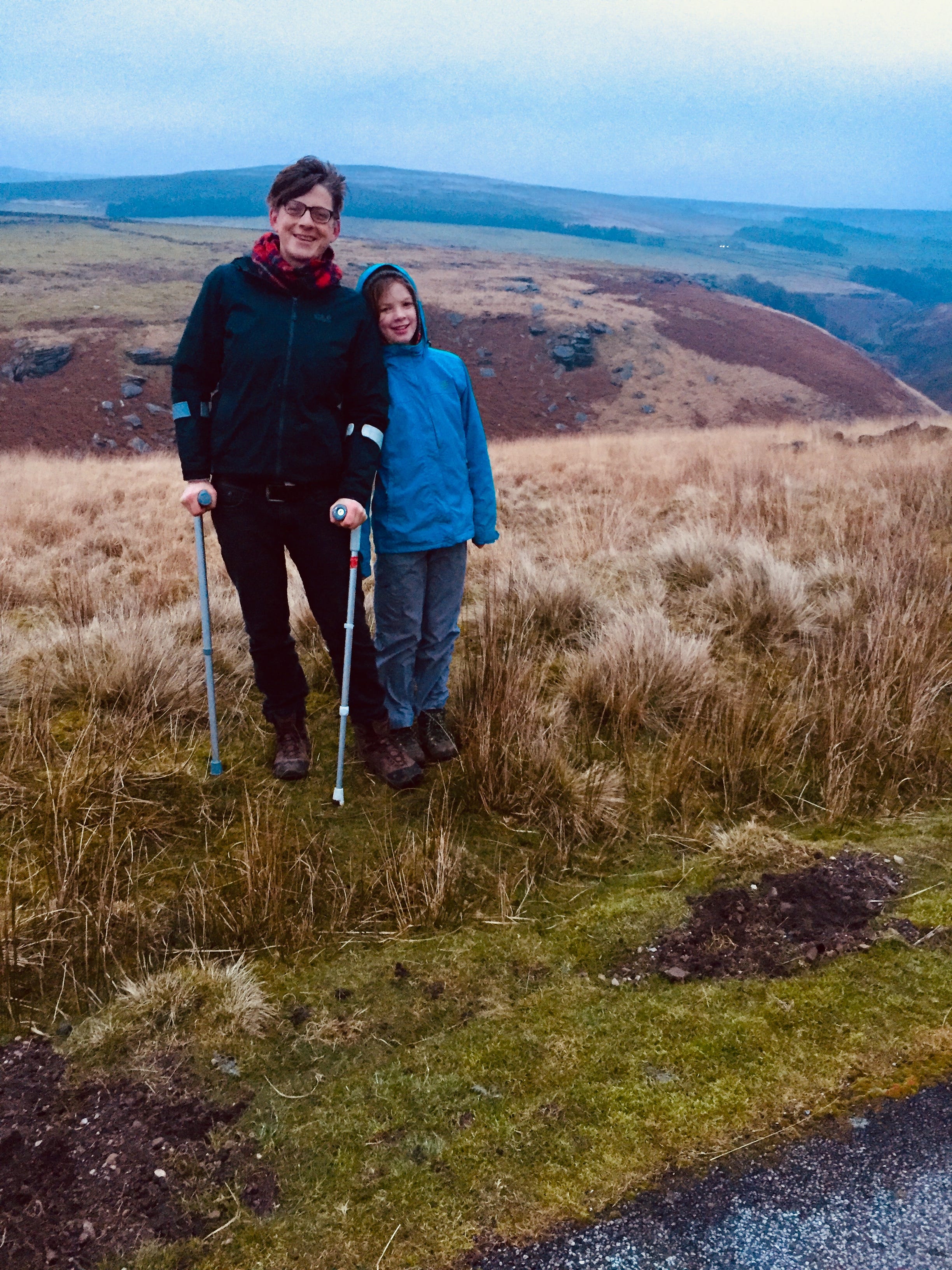
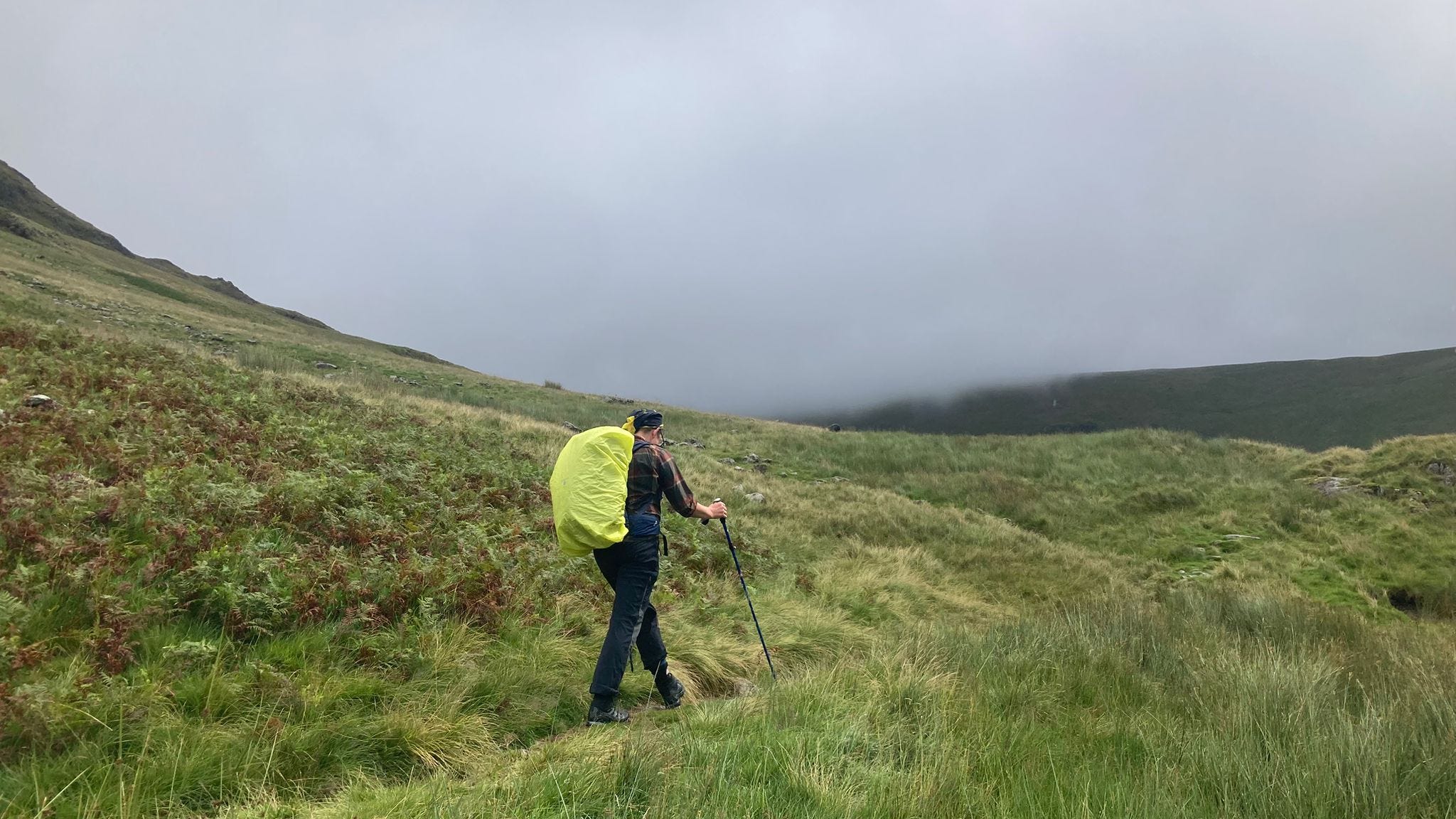
So when I say that we grow into the new shapes of our lives, I am not dismissing the pain and loss. But I also reassure myself that I cannot walk far, I will have a moss garden; if I cannot easily get outside, I will keep terrariums, and the moss will be a tiny forest my mind can walk through. In the meantime, I walk and walk, always in boots which support my ankles. On long walks I wear splints and use sticks for long walks, though my definition of long might be different to yours – in summer, I’ll walk the 270 miles of the Pennine Way, after the 210 miles of out Coast-to-Coast last year. And I write, and when it hurts, I use dictate.
It’s getting harder to remember the self I was when I climbed and ran and worked out. This Clare walks each night and sees owls. This Clare stops to identify plants.
Poetic form works in similar ways. The limits we set around the poem gives rise to new possibilities. I won’t labour this parallel - we choose to write in form; we don’t choose our vulnerabilities and disabilities, or how our bodies age and get ill. I’d love to climb again in Spain, in the shock of the afternoon heat and the smell of rosemary, to sleep on the ground exhausted and drunk, to rise in the night to smell pine and watch the moon. I’d love to run through the woods in the early morning, trees rushing past me like water. There’s no because, or so, or but, just and. I used to climb, and now I don’t, and now I see owls. Some days it hurts to write, and then I rest more and use dictate. I miss running, and I really miss climbing, and my hips hurt, and last night I watched a young tawny owl calling from a chapel roof, and tomorrow I’ll pick up shards, and I’ll count how many hazel saplings survived into Spring.
Upcoming nature-themed events in May and June:
In June, Reading Bogwise (my collaboration with Anna Chilvers) will welcome the incredible author, disability activist and owl-lover Polly Atkin who lives with the chronic hypermobility caused by Ehlers Danlos Syndrome, and who will read from her latest publications including Emergency Dream. In the meantime, on 26th May, you can listen to bryologist and author Johnny Turner, one of the most passionate and articulate speakers on all things moss. If you’d like to write as well as listen, you could join Writing Bogwise on 20th May as we explore the bog as a living archive, an online writing workshop on bog bodies, ritual offerings and lost histories. Plus, we’ve just announced an actual, in-person 3-day writing residential – Bog-time: retreat into writing – which you can read about here.
And in June, I’m teaming up with Miriam Darlington and the Writing School to offer daily Wild Writing workshops, which are summarised here. You can buy tickets for the day, a week, or the whole month here
1st Rewilding: the wild can transform our environment, our language, and ourselves.
2nd We are all lichen now: what tiny lifeforms can teach us about community
3rd What-Three-Birds: everyone has birds inside them. What and where are yours?
4th Consider the Hedgehog: explore this fascinating, ancient mammal
5th Go Wild on Fridays: featuring your favourite places, special species, and more!
6th The Art of Survival: from bushcraft and treehouses to creative writing
7th Earth Angels: inspirational writers who changed our perception of wild places.
8th Neurodivergent by Nature: why biodiversity needs neurodivergence.
9th Moon Madness: the moon in its melancholy, myth, and magnificence.
10th Walking the Wild: footpaths can lead us to our best writing.
11th Go Wild with Weasels: the fascinating family of mustelids.
12th Go Wild on Fridays: featuring favourite places, special species, and more!
13th Tremendous Tress: find connection with trees in this online writing workshop.
14th Cloud Appreciation: the artistic, poetic and scientific appreciation of clouds
15th Bears and Fears: how frightening are they really?
16th Bog Time : what bogs can teach us about time and the way we live
17th Soil and Soul: if delving into the soil is our mission, what can we unearth?
18th Good Grief: how do we write our way out of the muddy waters of grief?
19th Go Wild on Fridays: featuring your favourite places, special species, and more!
20th Consider the Curlew: bird of the wild coast and the sweeping moor.
21st Buzzing: an online writing workshop inspired by midsummer insects!
22nd: Restoration: the intersection of personal and ecological recovery
23rd The Blue Mind: exploring all things oceanic
24th Queer Nature: what the diversity of the natural world might teach
25th Roots and Ruins: where life recovers, recycles and turns into newness.
26th Go Wild on Fridays featuring your favourite places, special species, and more!
27th Owl Sense: the mythology and magic of owls.
28th Urban Wilderness: the animals, plants and birdlife of towns and cities.
29th Butterflies and Moths: celebrate these delicate, celestial, creatures.
30th Awesome: moments of awe in nature.
Finally – free bog writing workshops for groups in Lancashire and Yorkshire.
Lots of you will know that I’m very active in the campaign to protect Walshaw Moor from a proposal to build England’s biggest onshore wind farm on its blanket bogs, its nesting sites for curlew and merlin and lapwing, its heritage and SSSIs. I’m offering free in-person readings and in-person creative writing workshops for any organisations, groups and projects based in areas directly impacted by the Calderdale Wind Farm proposal, primarily in West Yorkshire and East Lancashire. Workshops and readings will focus on creating awareness and understanding of moorland and peat, as well as supporting community and creative expression. If you can bring together an 8+ group of people in a suitable venue, then I’ll run a bog-writing workshop for you.
Alternatively, I’ll read for larger audiences who would like to listen to poetry and stories from “The Book of Bogs: stories of a Yorkshire Moor and other peatlands”.
I only ask for an optional contribution towards travel expenses, plus a cuppa (Yorkshire Tea, obvs). Drop me an email for more details: shaw_clare@hotmail.com
My dear Clare - I send the gentlest of hugs. I am 80 - have been hyper mobile all my life resulting in a long list of problems. The fact that hyper mobility affects you internally as well as all the connective tissues leads to all sorts of problems.
The way you are tackling the problem is inspiring - a bit late for me but wonderful. Keep going! xxx
Snap! to the hypermobility, arthritis, chronic pain, & change. And of course jigsaws. 🤗And always being late to the party…