
FORM!
WHAT IS IT GOOD FOR?

Form – what is it good for? Quite a lot, it turns out. The poetic focus and concision, for example, of being required to work within a particular rhyme scheme, or within a certain number of lines. Traditional form engages us in a conversation with a poetic history; it places us within a shared poetic culture and heritage. Poetic form can act as a scaffolding for thought and experience; a container for intense emotion. It is of course, a great way to develop poetic discipline, whilst conversely being a fun and exciting way of playing – trying things we’re not used to, finding new possibilities, taking risks, stepping beyond the habitual and discovering new directions. And perhaps most importantly – for me, anyway - form offers a powerful means of expression, exploration and discovery, deepening the meaning which hovers under the surface of our conscious poetic intentions.
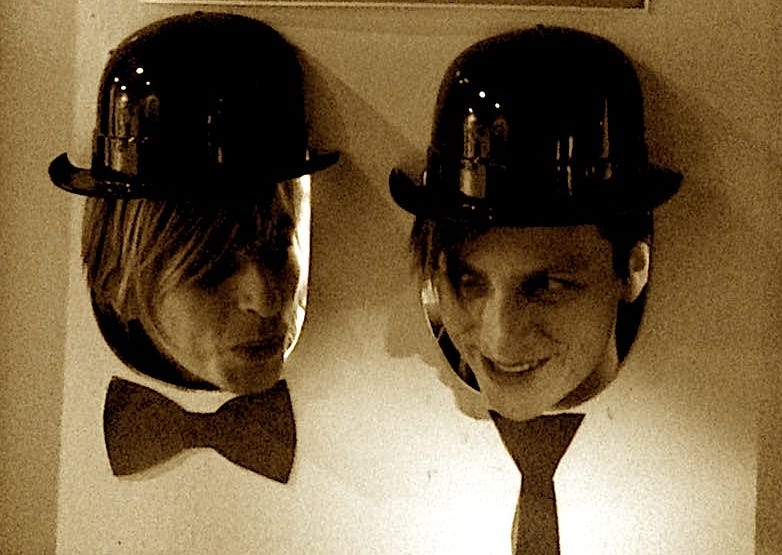
On Tuesday night, Kim and I - aka the Laurel and Hardy of poetry - delivered an online workshop on poetic form. For our paying subscribers, you’ll find a recording of that session in your substack inbox, along with Kim’s powerpoint and sestina template. Yes, Kim bravely and beautifully led us through one of the most complex forms, despite my claim that it was the metaphorical equivalent of bringing cabbage to the shared poetry meal. And of course, Kim proved me entirely wrong – using a stunning example by Kathryn Maris to show how sestinas can offer us all a fluid and powerful receptacle for our obsessions. Which, in Kim’s case, is currently hamsters.
Again, the joy of working with your best – and definitely most unique - friend.
What dish did I bring to the poetry buffet? Well, first of all, I brought the dictionary definition of form as “the visible shape or configuration of something” which similar to shape, or appearance, or pattern. Even more wide-ranging in its scope is form as “ a particular way in which a thing exists or appears”. In this widest sense, everything – from dogs to snowflakes to thoughts – has a form. And poetic form refers to the ways in which we may arrange a poem to achieve a specific effect – potentially working with line lengths, stanza lengths, rhyme schemes, systems of repetition, white space and other structural, aural, sensory and aesthetic elements of the poem.
See, form is a place of infinite possibility. Despite this, we often understand poetic form as referring to traditional set forms, like villanelles, or ballads, or haiku. And, of course, the sonnet – which Don Paterson describes as “one of the greatest achievements of human ingenuity .… it isn’t some arbitrary construct that poets pit themselves against out of a perverse sense of craftsmanlike duty – it’s a box for their dreams and represents one of the most characteristic shapes human thought can take.”
A box for dreams! Imagine that. And yet it seems so constrained – a 14-line poem in iambic pentameter, with the Shakespearean form structured in three quatrains and a couplet – we read Simon Armitage’s poem as a gutpunch example. I also offered Mimi Khalvati’s “Eggs” as a breathtakingly skilled example of the Petrarchan sonnet, with its octave and sestet exemplifying how the sonnet, with its volta, or turn, is an instrument for pushing harder and deeper into a subject.
And though no-one in the workshop seemed to know what a “marrow spoon” is, we made use of Adam O Riordan’s metaphor of “The Sonnet as a Silver Marrow Spoon”, translating this peculiarly posh and gory form of cutlery into a poetic sundae spoon for pushing into the otherwise unreachable depths of a knickerbocker glory, which is to say, the poem.
Adam, like many of us, initially struggled with the sonnet – “It seemed like the correct form, the form I should be writing in. But I would become snagged in the intricacies of the meter and struggle for rhymes only to find that they felt forced”. And he found his way forwards in simplicity – “strip the sonnet down to its simplest form: an idea or a story that, somewhere around the eighth or ninth line, is nudged or diverted slightly in its path so that it turns and says something else”. Why? Because “The turn in a sonnet allows the poet to interrogate and cast new light on the previous eight lines … the turn allows reassessment; it’s a chance to comment upon what came before or to include a twist…. The writing of the sonnet—as with any poem—should be a form of discovery, a digging down into the self”.
So, tooled up with our long-handled poetry spoons, we set about writing our simple sonnets, stripped of rhyme and iambs, and following these suggested exercises:
1. Think of a shared family story or anecdote, and write an eight-line account of it.
Now in six lines, look back and reflect back on it from your own personal, adult perspective.
OR
2. In eight lines, describe an everyday object – perhaps something you know intimately. In six lines, revisit that object from a different perspective – perhaps imagining how someone else encounters it, or reflecting on its origins, or its ending.
Enjoy! Our paying subscribers will be invited to join – and perform at - a special online “Poetic From” open mic on 22nd March. Feel free to sign up for one month (just £4) and join us!
Where can I find sestina template & PowerPoint?
Totally fab. Thank you.